Surface coatings of neodymium magnets: differences, risks, and the right choice
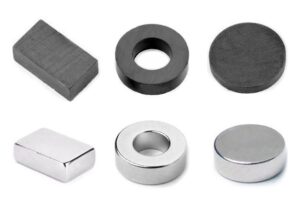
Neodymium magnets (NdFeB) are among the strongest permanent magnets, but the material itself is chemically unstable and corrodes quickly without protection.
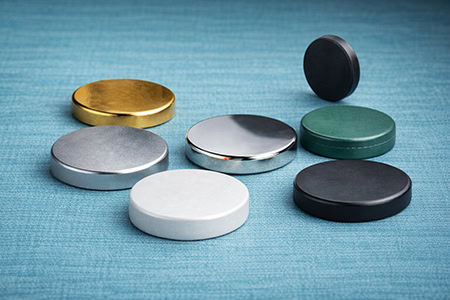
Therefore, various surface treatments are used in practice – from thin metallic coatings and epoxy coatings to rubber or plastic casings that protect the magnet while also influencing its mechanical and functional properties.
Why a magnet needs a surface coating
Neodymium magnets are made from an alloy of neodymium, iron, and boron (NdFeB). The high content of iron and reactive neodymium makes the unprotected material susceptible to corrosion – especially in humid environments.
This is not only about direct contact with water. Regular air humidity and especially condensation caused by temperature fluctuations (for example in an unheated garage or warehouse) can also be problematic. If the protective layer is not applied or becomes damaged, the magnet may start to degrade: the surface structure weakens, pores develop, and over time the magnet can begin to crumble.
A surface coating is therefore not “cosmetic,” but functional protection.
- Protects against corrosion (humidity, condensation, salt, chemicals).
- Increases surface durability (abrasion, micro-scratches, handling).
- Modifies surface properties (friction, electrical conductivity, suitability for contact with other materials, ability to be glued).
- Affects appearance (e.g., shiny metallic surface, matte black coating, or protective rubber coating).
Types of magnet protection: metallic coatings, epoxy coatings, and casings
Surface protection can take different forms depending on the intended use of the magnet. In practice, three main solutions are commonly used: thin metallic coatings, protective epoxy coatings (polymer-based coatings), and thicker rubber or plastic casings.
| Type of Protection | Layer Material | Typical Thickness | Characteristics |
|---|---|---|---|
| Metallic coating | Metal (nickel, zinc, chromium, gold…) | approx. 5–25 µm | Thin metallic coating; basic surface protection; specific properties depend on composition |
| Epoxy coating | Epoxy resin / polymer | approx. 10–30 µm | Continuous polymer barrier coating against moisture and condensation |
| Rubber / plastic casing | Rubber / plastic | typically measured in millimeters | Mechanical protection; rubber increases friction; plastic can act as a water barrier if properly sealed |
Each layer creates a certain distance between the magnet and the metal surface, which reduces its magnetic strength (pull force). The effect is greatest with thicker rubber or plastic casings, while with thin metallic coatings the difference is often negligible in practice. However, although a rubber coating reduces magnetic strength due to its greater thickness, its higher friction can significantly improve resistance to sliding on smooth surfaces.
Most common surface coatings: quick overview
Important: A surface coating protects the magnet only as long as it remains intact.
If the layer is significantly scratched, chipped, or cracked, moisture can reach the magnet material through the damaged area, and corrosion may spread even beneath the surrounding undamaged coating.
The most critical areas are usually edges, corners, and impact points – these are the places where the coating is most easily damaged (e.g., when two magnets collide).
| Surface Coating | Best For | Weaknesses | Typical Use | Price |
|---|---|---|---|---|
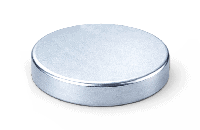
Zn (zinc)
|
Suitable for dry environments and light-duty use; basic functional protection with emphasis on cost. | Softer coating with lower resistance to abrasion and scratches; less suitable for long-term humidity and frequent condensation. Protection deteriorates quickly if mechanically damaged. | Workshops, less demanding technical environments, and cost-sensitive applications. | Lowest |
NiCuNi (nickel–copper–nickel)
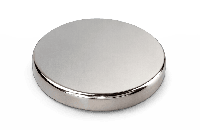
|
Suitable for dry conditions and general use; tolerates occasional humidity without prolonged condensation. Hard surface with good abrasion resistance. | Not suitable for long-term humidity, condensation, or salt water; the coating is hard but brittle – edges may chip upon impact. Once damaged, corrosion can begin to spread from the affected area. | Interiors, dry storage areas, technical and DIY applications. | Low |
Epoxy (epoxy coating)
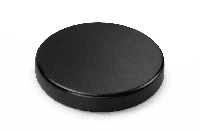
|
Humid environments and condensation: continuous moisture barrier, often more resistant than NiCuNi in conditions with frequent condensation. | Softer than metallic coatings – scratches more easily. If deeply damaged, moisture can penetrate underneath (corrosion may then spread unseen). Not intended for permanent submersion – moisture may gradually penetrate through micropores. | Garages, warehouses, occasional outdoor use without permanent water contact. | Medium |
Rubber
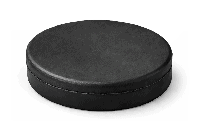
|
Mechanical protection and higher friction: protects surfaces, absorbs impacts, and improves resistance to sliding. Often used on rubber-coated pot magnets (magnetic mounts). | Reduces magnetic strength (pull force) by increasing the distance between the magnet and the metal surface. Not automatically corrosion protection for the core: sealing quality is crucial; if moisture gets under the rubber, the internal coating of the magnet becomes key. | Rubber-coated pot magnets (magnetic mounts), contact with painted/sensitive surfaces, applications where resistance to sliding is important. | Medium |
Plastic encapsulation (ABS / PP)
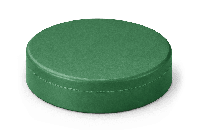
|
High humidity up to permanent submersion: the magnet is hermetically sealed in a plastic layer (≈ 1–2 mm), which is impermeable to water. Also provides mechanical protection. | Reduces magnetic strength (pull force) by increasing the distance between the magnet and the metal surface. Long-term UV exposure may cause non-stabilized plastic to degrade/crack. | Aquariums, permanent submersion (fresh/salt water), outdoor sensors, industrial wet environments. | Medium to higher |
PTFE (Teflon)

|
Demanding chemical environments: chemically inert, non-stick surface with low friction. Suitable where contact with aggressive media (e.g., acids, salts) or a “non-stick” requirement is critical. Humidity and water: resistance depends on the design – PTFE coating ≠ PTFE encapsulation (sealed enclosure). |
Very high price; specific technology and availability. Surface is very slippery and difficult to bond – often requires mechanical fastening. For long-term submersion, always verify whether it is a truly encapsulated (sealed) solution, not just a coating. |
Chemical industry, laboratories, food processing, pharmaceuticals, aggressive environments. | High |
Au (gold) / Ag (silver)

|
Special applications (usually dry environments): electrical conductivity, contact surfaces, appearance, and surface compatibility. Often a thin top coating applied over another metallic coating. | Not automatically better protection in humid conditions; overall resistance depends on the underlying coating (often NiCuNi) and whether the thin top layer becomes damaged/worn. Higher cost. | Electronics (contacts), measurement/sensing, design applications, jewelry/decor. | High |
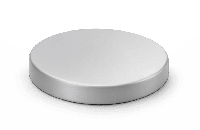
Parylene (vacuum polymer)
|
Ultra-thin, highly uniform moisture barrier while maintaining minimal thickness. Often used in industrial/B2B applications where protection and dimensional precision are critical. | Specialized technology with higher cost; limited availability (typically industrial orders). Performance depends on specific specifications and coating combinations. | Electronics, sensors, medical and precision applications. | High / individual pricing |
Note: The table provides a basic overview of individual surface coatings. In practice, however, coatings are often combined. The goal is to combine the advantages of different solutions: one coating may provide corrosion resistance, another mechanical protection or increased friction.
NiCuNi coating is the standard – but not a universal solution
The most common surface coating for neodymium magnets is the multilayer NiCuNi coating. In practice, NiCuNi is the most frequently sold surface coating – e-shops typically offer it as the standard because it is affordable and works very reliably in dry environments.
NiCuNi is often mistaken for a “waterproof” solution. In reality, it is primarily suitable for normal operating conditions, not for long-term humidity, condensation, salt water, or aggressive chemicals.
Epoxy and outdoor use
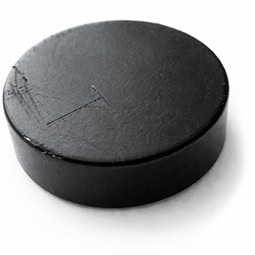
If you plan to use a magnet in a more humid environment, it is often wiser to choose an epoxy coating. Epoxy forms a continuous barrier that prevents moisture from easily reaching the magnet material.
- Advantage: better protection in humid conditions, often suitable for more demanding environments.
- Disadvantage: if deeply scratched, water may penetrate beneath the coating and corrosion can then spread invisibly.
For permanent submersion (e.g., water, aquarium, fountain), relying solely on a surface coating is not sufficient. In such cases, additional encapsulation or a different type of solution is required.
Rubber-coated magnets: protection and grip
A rubber coating is excellent where the magnet is frequently moved or comes into contact with painted or sensitive surfaces. It reduces the risk of scratches, absorbs impacts, and protects both the contact surface and the magnet itself.
Keep in mind that a thicker rubber layer increases the distance between the magnet and the metal surface, which reduces pull force compared to the same magnet without rubber. However, the higher friction of rubber can in practice significantly improve resistance to sliding on smooth surfaces, which is why rubber-coated pot magnets are often used on smooth or sensitive surfaces.
Steel case: not a surface coating, but a structural solution
A steel case is not a surface coating, but a protective steel part used in pot magnets (magnetic mounts). It protects the magnet and changes how it behaves in practice.
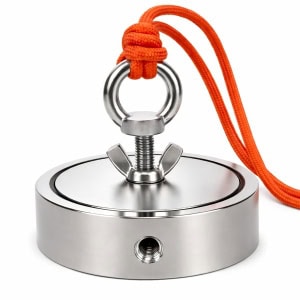
- Protects the magnet from mechanical damage (impacts, chipping, abrasion).
- Increases magnetic strength (pull force) in one direction
- Improves overall durability and simplifies mounting (e.g., thread, eye bolt, hook).
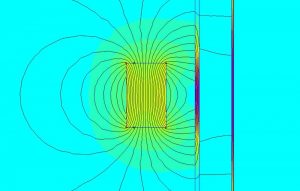
Key principle: The steel case guides and closes part of the magnetic flux through its sides and back, concentrating it into the open contact surface. As a result, the assembly usually achieves higher magnetic strength (pull force) on steel than the same magnet without a steel case. At the same time, the magnetic field on the sides and back is significantly weaker.
For this reason, steel-cased magnets are mainly used where high pull force, reliability, and mechanical durability are important – for example in magnetic mounts and magnet fishing magnets.
How to choose: a simple decision tree
Step 1 – environment (humidity and chemicals):
-
Dry indoor use without condensation?
→ NiCuNi is the standard choice.
→ If cost is the main factor and the application is not demanding, Zn (zinc) may also be sufficient. -
Occasional humidity or mild condensation?
→ Prefer NiCuNi.
→ Zinc is suitable mainly for less demanding applications. -
Frequent condensation, humid storage, outdoor use?
→ Consider epoxy coating or an encapsulated solution. -
Permanent submersion / aggressive chemicals?
→ Solutions such as full plastic encapsulation or special coatings (e.g., PTFE) are required. - Note: The above applies only as long as the surface remains undamaged – impacts, magnets snapping together, and other mechanical stress can quickly compromise the protection.
Step 2 – handling and mechanical stress:
-
Risk of impacts, magnets snapping together, or chipped edges?
→ steel-cased magnets (magnetic mounts), which better protect the magnet and are more suitable for demanding use.
→ or rubber-coated magnets / rubber caps or plastic casings, which absorb impacts and help protect the edges. -
Want to avoid scratching the contact surface or need higher resistance to sideways sliding?
→ rubber-coated magnets (rubber-coated magnetic mounts) / rubber caps
→ alternatively plastic casings, which do not increase friction and do not protect contact surfaces as effectively as rubber.
Step 3 – special functional requirements:
-
Need electrical conductivity, a specific appearance, or chemical compatibility?
→ Au / Ag (electrical contacts, design applications).
→ PTFE (chemical resistance, low-friction surface).
Most common mistakes
-
“I’ll use nickel outdoors and it’ll be fine.”
Maybe in the short term. Often not in the long term – especially in humid conditions with temperature fluctuations and condensation. -
Ignoring coating damage.
Magnets can become chipped or scratched upon impact. Once the surface coating is damaged, corrosion usually spreads much faster. -
Ignoring the increased distance between the magnet and the metal surface.
Rubber, paint, tape, or paper – even a thin layer between the magnet and the metal surface can significantly reduce pull force. -
Confusing a surface treatment with a structural solution.
A stronger bare magnet is not always a better solution than a smaller magnet in a steel case. A steel case helps direct the magnetic flux into the working surface, often resulting in higher pull force on steel along with better mechanical durability.
FAQ
Is nickel an allergen?
In sensitive individuals, nickel may cause an allergic reaction when it comes into contact with the skin. If the magnet will be in long-term contact with skin (e.g., jewelry or wearable products), consider a more suitable surface treatment or a barrier between the magnet and the skin.
Is epoxy “waterproof”?
Epoxy coatings are often better suited for humid environments than nickel coatings, but they are not a guarantee for permanent submersion. If the coating becomes damaged, water may penetrate beneath the surface.
Why did my magnet rust even though it had a surface treatment?
The most common causes are micro-cracks or scratches in the coating, long-term humidity, condensation, or use in an environment the surface treatment was not designed for.
Is a magnet in a steel case stronger?
A steel case concentrates the magnetic flux into the contact surface, helping the magnet achieve higher effective pull force in many practical applications.